







Key takeaways
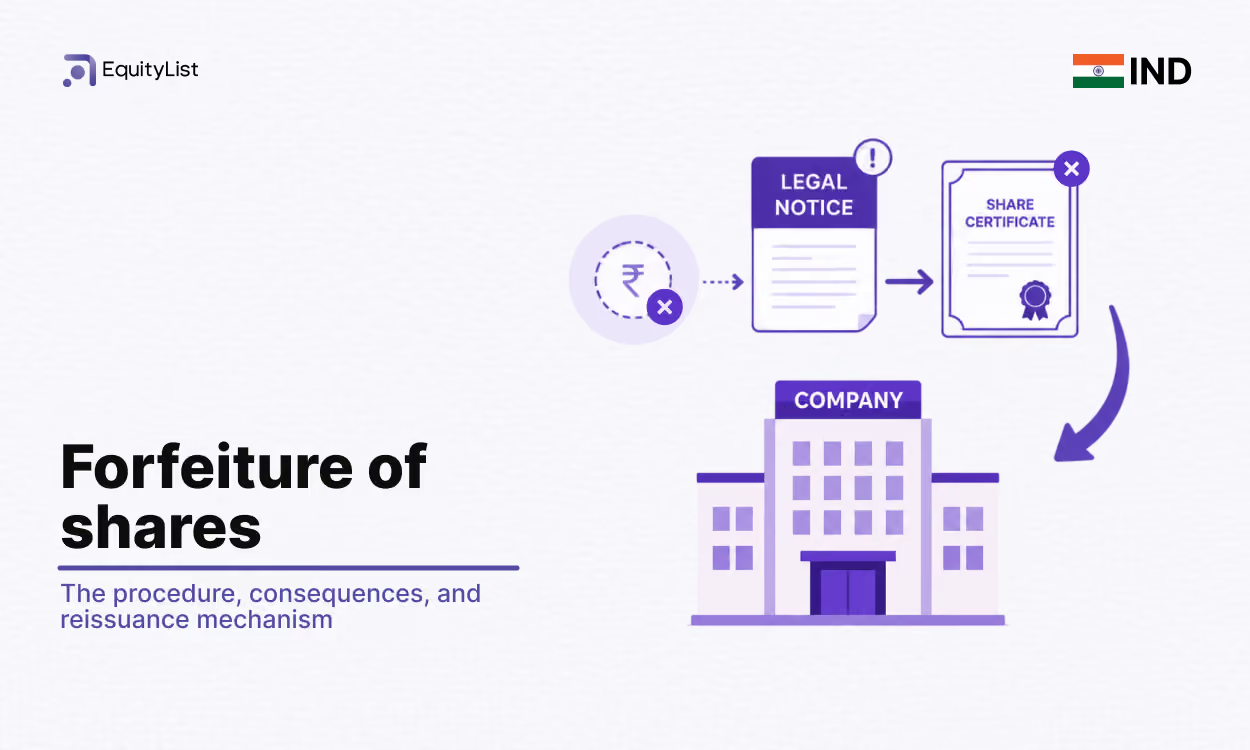
- Forfeiture of shares is a company's mechanism for cancelling the shares of a shareholder who has failed to pay a call on partly-paid shares. A call is a formally demanded instalment on shares that have not yet been fully paid up.
- The procedure is governed by Regulations 28 to 34 of Table F, Schedule I of the Companies Act, 2013, which apply unless a company's AoA contains custom provisions.
- The notice must state the unpaid amount, give at least fourteen days to pay, and warn that non-payment will result in forfeiture.
- Forfeiture takes effect on the date the board passes the resolution, not the date the notice period expired.
- The former shareholder ceases to be a member but remains liable for all amounts that were presently payable at the forfeiture date. Amounts not yet due on the forfeiture date are not recoverable from the former shareholder.
- Under Regulation 31, the board may cancel a forfeiture before the shares are sold or otherwise disposed of. Once disposed of, this option closes permanently.
- For listed companies, Regulation 30 read with Para A of Part A of Schedule III of the SEBI LODR Regulations, 2015 requires disclosure of both forfeiture and reissue of forfeited shares. Where the board resolves to approve reissue, disclosure must reach the stock exchange within 30 minutes of the closure of that board meeting. Forfeiture that does not arise from a board meeting outcome requires disclosure within 24 hours of occurrence.
What is forfeiture of shares?
Forfeiture of shares is the process by which a company cancels a shareholder's shares as a consequence of the shareholder's failure to pay a call on those shares. The forfeited shares revert to the company, the shareholder loses membership and the amounts already paid, and the company may reissue those shares to recover what remains outstanding.
The mechanism exists because Indian company law permits shares to be issued on a partly-paid basis. A subscriber may pay the application and allotment amounts at the time of issue, with the balance payable in one or more instalments called "calls." If the shareholder fails to pay a call by the due date, the company needs a structured enforcement route. Forfeiture is that route.
The Companies Act, 2013 does not contain a dedicated section prescribing the forfeiture procedure. The procedure comes from Regulations 28 to 34 of Table F, Schedule I of the Act, which companies can adopt in their Articles of Association (AoA). Table F functions as the default set of articles for companies limited by shares: if a company's AoA does not contain custom forfeiture provisions, these regulations apply automatically. If the AoA contains custom provisions, those govern, provided they are not inconsistent with the Act.
When a company can forfeit shares
Forfeiture is available only when a shareholder fails to pay a call, a formally demanded instalment on partly-paid shares. The call may be the allotment money payable when shares are first issued, or any subsequent instalment such as a first call, second call, or final call, each defined in the terms of issue at the time of allotment.
Forfeiture differs from surrender of shares. Surrender is voluntary: the shareholder offers to return the shares to the company, and the company accepts. Forfeiture is compulsory: the company initiates the action for non-payment. Both result in the shares reverting to the company, but the procedures and legal consequences differ.
The notice a company must serve before forfeiting
Before forfeiting shares, the board must serve a formal notice on the defaulting shareholder. Under Regulations 28 and 29 of Table F, this notice shall do three things: state the unpaid call amount together with any interest that has accrued under the terms of issue, specify a payment deadline that is not earlier than fourteen days from the date of service, and warn explicitly that if payment is not made by that date, the shares will be liable to forfeiture.
If the shareholder pays in full before the deadline, the matter ends there. If the deadline passes without payment, the board may then pass a resolution forfeiting the shares under Regulation 30.
What the board can do with forfeited shares
Under Regulation 31, forfeited shares may be sold or otherwise disposed of on such terms and in such manner as the board thinks fit. Before any sale or disposal takes place, the board may cancel the forfeiture under the same regulation, on such terms as it thinks fit. Once the shares are sold or disposed of, this option closes permanently.
For listed companies: disclosure requirements
For listed companies, Regulation 30 of the SEBI (Listing Obligations and Disclosure Requirements) Regulations, 2015, read with Para A of Part A of Schedule III, requires disclosure of forfeiture and reissue of forfeited shares as distinct events. Where the board passes a resolution to approve reissue, the disclosure must reach the stock exchange within 30 minutes of the closure of that board meeting under Regulation 30(6)(a). Forfeiture that does not arise as the outcome of a board meeting is governed by the general disclosure timeline of 24 hours from occurrence.
What happens to the former shareholder after forfeiture
A person whose shares have been forfeited ceases to be a member in respect of those shares on the date the board resolution is passed. The company removes that person's name from the Register of Members, and the share certificate held by the former shareholder is treated as cancelled and has no further legal effect.
The financial liability does not end at the same time. Regulation 32(i) provides that the former shareholder remains liable to pay the company all monies which, at the date of forfeiture, were presently payable by him in respect of those shares. 'Presently payable' means only what was already due on the forfeiture date. Amounts that would have fallen due later are not included. This liability extinguishes only when the company has received payment in full of all such monies.
The declaration of forfeiture and transfer to the buyer
Under Regulation 33(1), a written declaration by a director, manager, or secretary of the company stating that a share has been duly forfeited on a specified date serves as conclusive evidence of that fact against all persons claiming to be entitled to the share.
Once the board decides to sell or dispose of the forfeited share, Regulation 33(2) provides that the company may receive the consideration for the share and execute a transfer in favour of the transferee, who is then registered as the holder of the share.
Regulation 33(4) protects the transferee: the transferee's title to the share is not affected by any irregularity or invalidity in the forfeiture, sale, or disposal proceedings, and the transferee is not required to see to the application of the purchase money paid.
Forfeiture for non-payment of share premium or other fixed amounts
Regulation 34 extends the forfeiture provisions beyond unpaid calls. Where any sum becomes payable at a fixed time by the terms of issue of a share, whether on account of the nominal value of the share or by way of premium, the forfeiture regulations apply to non-payment of that sum as though it were a call duly made and notified.
It means a company can forfeit shares when a shareholder fails to pay a call and in cases where a shareholder fails to pay a premium amount that was due at a fixed date under the original terms of issue.
FAQs on forfeiture of shares
What is the concept of forfeiture?
Forfeiture, in company law, is the deprivation of a shareholder's property as a penalty for failing to pay a call on partly-paid shares. It is not a contractual remedy in the ordinary sense. It operates under the statutory framework set out in Table F of the Companies Act, 2013 and the company's AoA, and requires strict compliance with notice requirements and a board resolution. The concept is grounded in the principle that a person who subscribes for partly-paid shares accepts an obligation to pay the balance when called, and the company has the right to enforce that obligation through cancellation of the shares.
Is it compulsory to reissue forfeited shares?
No. After forfeiture, the company may either reissue the shares or cancel them. Reissue is treated as a sale of existing shares rather than a fresh allotment, which means the company is not required to comply with Section 62 procedures such as rights issue requirements or private placement rules. If the shares are cancelled rather than reissued, the company's paid-up share capital decreases and the reduction must be reflected in the statutory records. The board decides which route to take and may reissue at any time after forfeiture, provided the board has not already cancelled the forfeiture.
.svg)
.svg)