
Key takeaways
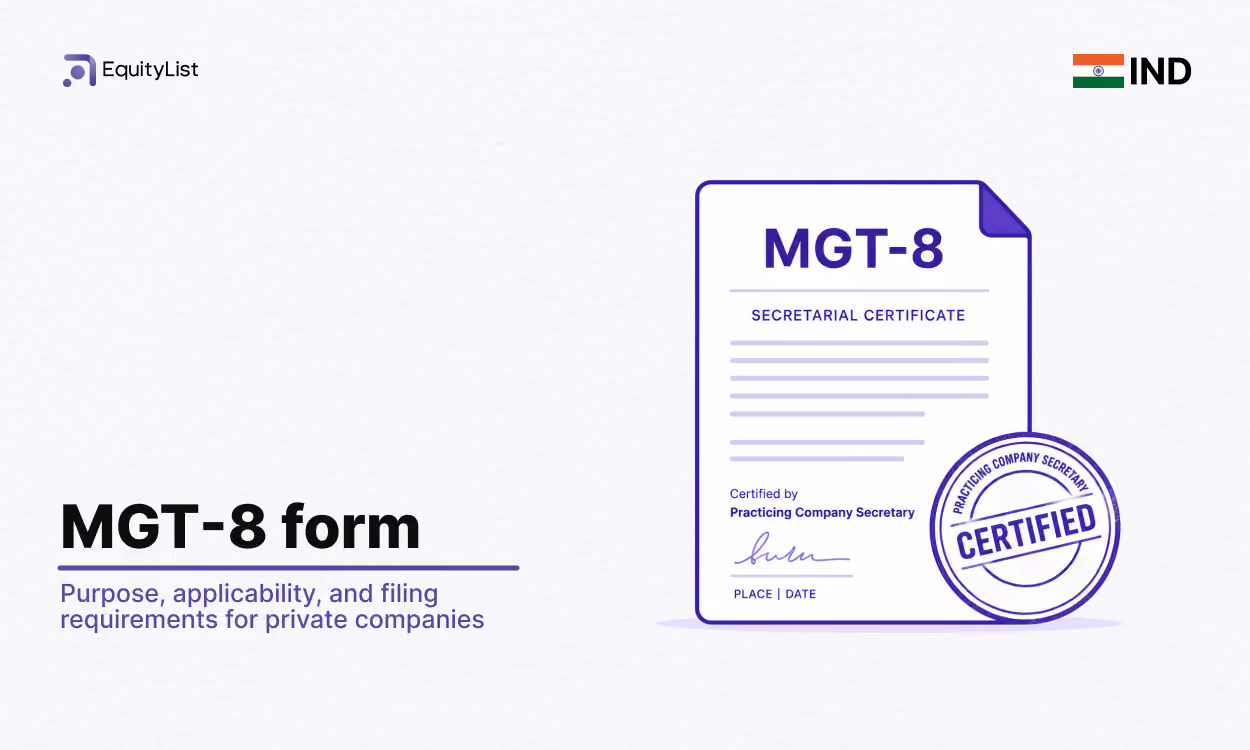
- Form MGT-8 is a certificate issued by a Company Secretary in practice (CS), confirming that a company's annual return (Form MGT-7) accurately discloses required facts and that the company has complied with the Companies Act, 2013. It is prescribed under Section 92(2) of the Companies Act, 2013 read with Rule 11(2) of the Companies (Management and Administration) Rules, 2014.
- MGT-8 is mandatory for listed companies, companies with paid-up share capital of ₹10 crore or more, and companies with turnover of ₹50 crore or more. The thresholds are independent; meeting either one triggers the obligation.
- MGT-8 is not an independent e-form on the MCA portal. It is attached to Form MGT-7 and shares its filing deadline of 60 days from the Annual General Meeting (AGM).
- The CS examines the company's actual registers, records, and filings before certifying MGT-8, not management representations alone. Gaps in statutory records can delay or prevent certification.
- A CS who certifies incorrectly is liable to a fixed penalty of ₹2 lakh under Section 92(6) of the Companies Act, 2013, separate from penalties on the company.
- MGT-8 covers compliance with the Companies Act, 2013 only. The secretarial audit (Form MR-3) is broader in scope and applies at higher thresholds.
What is Form MGT-8?
Form MGT-8 is a certificate issued by a Company Secretary in practice (CS) confirming that a company's annual return accurately discloses the required facts and that the company has complied with the applicable provisions of the Companies Act, 2013. It is prescribed under Section 92(2) of the Companies Act, 2013 read with Rule 11(2) of the Companies (Management and Administration) Rules, 2014.
The form is not filed independently on the MCA portal. It is a certificate prepared by the CS in the prescribed format, attached to the annual return (Form MGT-7) before that return is submitted. There is no separate e-form or separate filing fee for MGT-8. Its deadline is the MGT-7 filing deadline.
Scenarios where your company needs MGT-8
Under Section 92(2) of the Companies Act, 2013 read with Rule 11(2) of the Companies (Management and Administration) Rules, 2014, MGT-8 is mandatory for:
- Listed companies. All companies whose shares are listed on a recognized stock exchange in India, regardless of size.
- Companies with paid-up share capital of ₹10 crore or more. Paid-up share capital is the amount shareholders have actually paid to the company for their shares, as recorded in the company's books. If this figure reaches ₹10 crore, MGT-8 is required for that year's annual return.
- Companies with turnover of ₹50 crore or more. Turnover is taken from the audited financial statements for the relevant financial year. Crossing ₹50 crore in a given year triggers the requirement for that year's return.
The thresholds are independent of each other. Meeting either one is sufficient to trigger the obligation. A private company with ₹5 crore paid-up capital but ₹60 crore in turnover must obtain MGT-8.
The threshold is assessed year by year. If your company crossed ₹50 crore turnover for the first time in FY 2025-26, MGT-8 is required for the annual return covering that year. It was not required in prior years.
What the CS examines before certifying MGT-8
When you engage a CS to certify MGT-8, they are not simply reviewing the annual return document you have prepared. The CS is required to examine the company's actual registers, records, books, and papers maintained during the financial year and certify, on the basis of that examination, that the annual return correctly reflects the company's position.
The areas the CS will want to verify include: whether the statutory registers (register of members, register of directors, register of charges) are current and accurate; whether board and shareholder meetings were properly conducted and minuted; whether share issuances, transfers, and ESOP exercises during the year were properly documented and recorded; whether filings made with the ROC, Regional Director, or NCLT during the year were filed within prescribed timelines; and whether any director appointments, resignations, or changes in composition were handled with the required approvals and disclosures.
The CS cannot certify from management representations alone. Gaps or inaccuracies in your company's statutory records will surface during this examination and may result in a qualified observation in the certificate, or prevent certification until the issue is resolved. Companies that maintain clean cap table records, up-to-date statutory registers, and timely ROC filings throughout the year will find the MGT-8 certification process straightforward. Companies that have deferred record-keeping will need to clean up before the CS can certify.
{{cta-form}}
How and when MGT-8 is issued
The CS issues the certificate in the prescribed format, generates a Unique Document Identification Number (UDIN) from the ICSI portal (a mandatory step for any document signed by a CS in practice) and delivers the signed certificate to the company. The company then attaches it to Form MGT-7 before submitting the annual return on the MCA V3 portal.
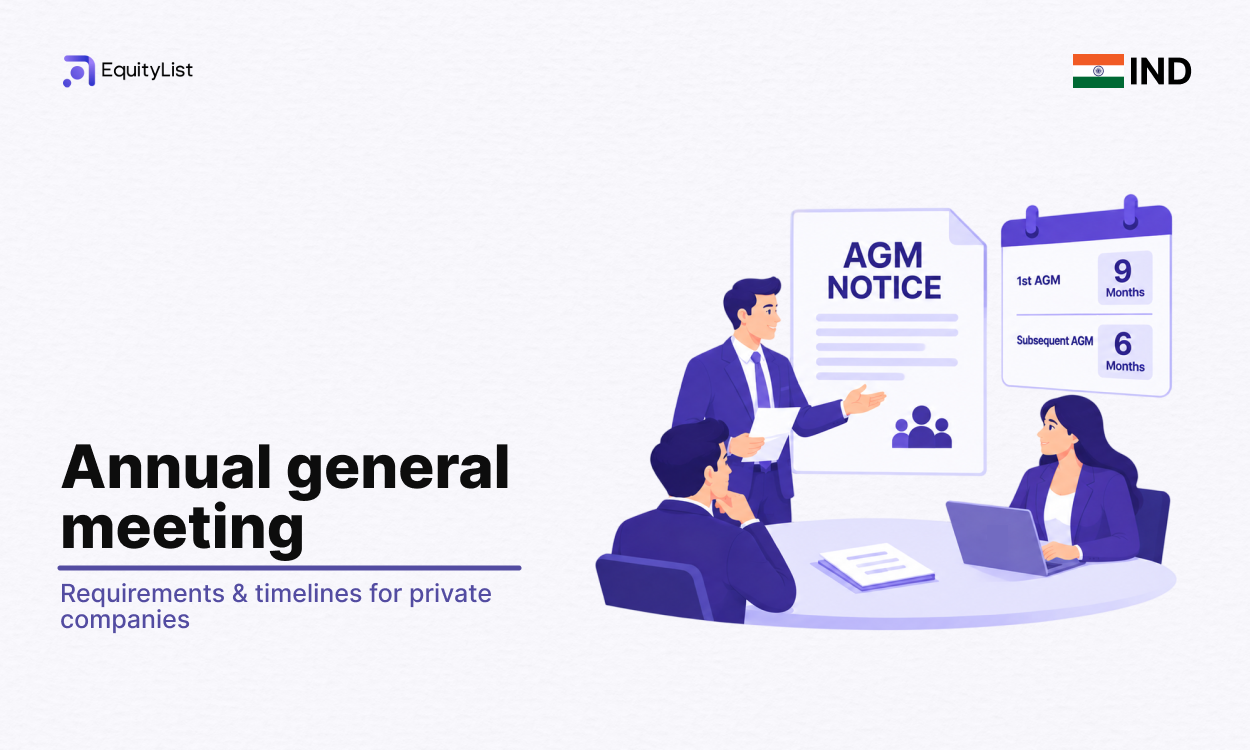
The filing deadline for MGT-7 is 60 days from the date of the Annual General Meeting (AGM) under Section 92(4) of the Companies Act, 2013. Where no AGM is held in a given year, the 60-day period runs from the date on which the AGM ought to have been held, and the company must file a statement explaining why the AGM was not convened.
What happens if MGT-8 filing is missing or incorrect
If MGT-7 is filed without the required MGT-8 attachment, the annual return is non-compliant for that year. Late or missing MGT-7 filings attract a penalty under Section 92(5) of the Companies Act, 2013: ₹10,000 at the point of default plus ₹100 per day of continuing default, subject to a maximum of ₹2 lakh for the company and ₹50,000 for each officer in default.
The penalties on the CS are separate. Under Section 92(6), a CS who certifies the annual return otherwise than in conformity with the Act or the rules is liable to a fixed penalty of ₹2 lakh. An incorrect certificate also exposes the CS to disciplinary proceedings by ICSI.
The practical implication for a founder is that your CS has meaningful personal liability riding on this certificate, which is what gives it independent value as a compliance verification. Because the CS's liability is contingent on their own independent examination, not on management representations, the certificate carries evidentiary weight that a self-certified return cannot.
How MGT-8 differs from a secretarial audit
Both MGT-8 and the secretarial audit (Form MR-3) are signed by a CS in practice, which is why the two are often conflated. The difference is in scope and output.
MGT-8 covers compliance with the Companies Act, 2013 specifically. Its output is a one-page certificate attached to the annual return. A secretarial audit covers the full range of laws applicable to the company, including SEBI regulations, FEMA, labour laws, and applicable sector regulations. Its output is a detailed report attached to the Board's Report, with observations and qualifications on each area examined.
The threshold triggers also differ. Secretarial audit under Section 204 of the Companies Act, 2013 applies to listed companies, public companies with paid-up capital of ₹50 crore or more or turnover of ₹250 crore or more, and private companies that are subsidiaries of public companies or have outstanding loans from banks or public financial institutions of ₹100 crore or more. MGT-8 is triggered at the lower thresholds of ₹10 crore paid-up capital or ₹50 crore turnover.
A growing private company may therefore be subject to MGT-8 for several years before it becomes subject to secretarial audit.
FAQs on Form MGT-8
What is the MGT-8 form?
Form MGT-8 is a certificate issued by a Company Secretary in practice (CS) confirming that a company's annual return accurately discloses all required facts and that the company has complied with the provisions of the Companies Act, 2013. It is prescribed under Section 92(2) of the Companies Act, 2013 and is attached to Form MGT-7 (the annual return) at the time of filing. MGT-8 is not an independent e-form on the MCA portal. It has no standalone filing fee or deadline separate from MGT-7.
What is the turnover limit for MGT-8?
The turnover threshold for MGT-8 is ₹50 crore or more in the relevant financial year, measured from the company's audited financial statements. A company crossing this threshold must obtain MGT-8 certification for the annual return covering that year, even if its paid-up capital is below ₹10 crore. Note that the December 2025 revision to the small company definition (which raised the small company turnover limit to ₹100 crore) does not remove this obligation. A company with ₹50–100 crore turnover that now qualifies as a small company still needs MGT-8, even if it files the simplified Form MGT-7A.
What is the difference between MGT-7 and MGT-8?
MGT-7 is the annual return itself. It's a statutory disclosure form that every company files with the Registrar of Companies (ROC) each year, covering shareholding, directors, KMPs, meetings, and compliance events for the financial year. MGT-8 is a certificate from a Company Secretary in practice that accompanies MGT-7 for companies above the prescribed thresholds. MGT-7 is what the company prepares and submits; MGT-8 is the independent professional verification that the MGT-7 is accurate and compliant. One Person Companies and small companies file the simplified Form MGT-7A rather than MGT-7; those above the prescribed paid-up capital or turnover thresholds must still obtain MGT-8, even when filing MGT-7A. Companies that fall below both thresholds file MGT-7 or MGT-7A without MGT-8.
.png)
.svg)
.svg)
.svg)

