
Key takeaways
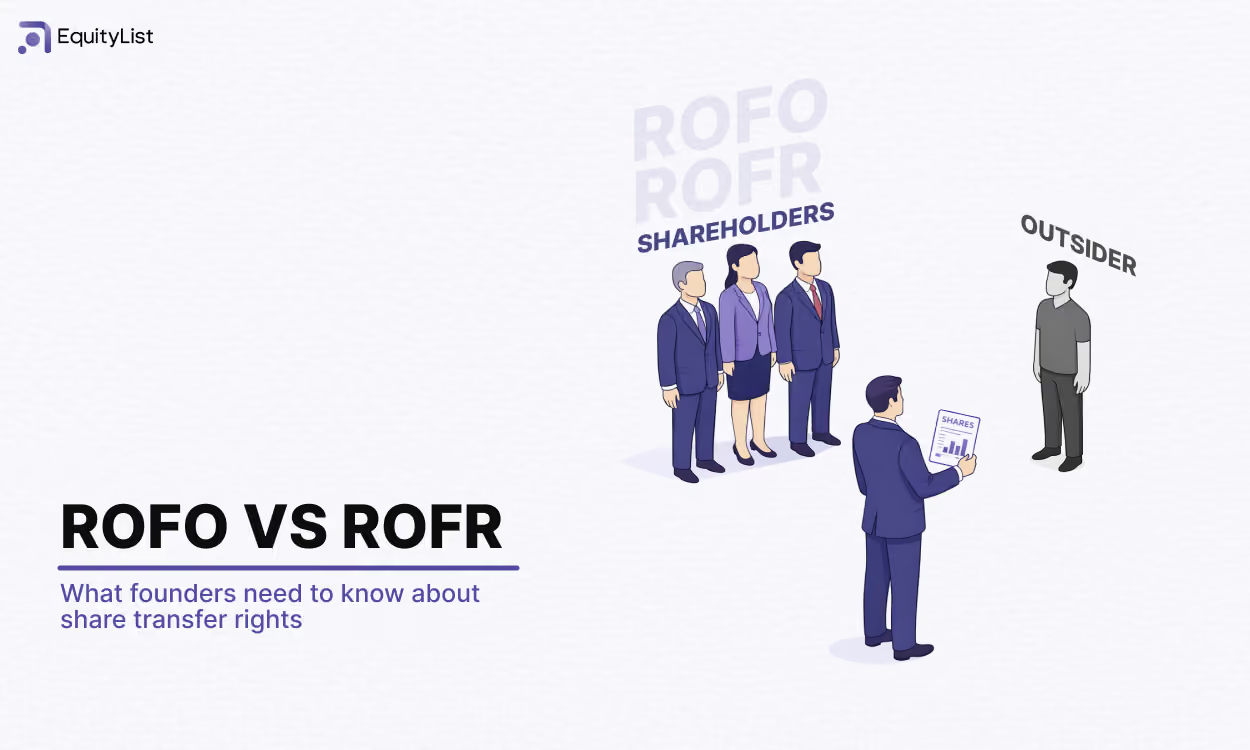
- A Right of First Offer (ROFO) requires the selling shareholder to offer shares to existing shareholders before approaching external buyers. Existing shareholders get the first look.
- A Right of First Refusal (ROFR) allows existing shareholders to match a third-party offer before a sale to an outside buyer can close. Existing shareholders get the last look.
- ROFO favours selling shareholders because it preserves their control over pricing and does not deter external buyers. ROFR favours existing investors because it guarantees them the opportunity to match any market-tested offer.
- ROFR can create a "stalking horse" problem where third-party buyers are reluctant to invest time and resources in a deal that may be matched, potentially reducing the sale price.
- Hybrid ROFO-to-ROFR clauses combine first-look and last-look protections but require precise drafting to avoid disputes.
- ROFO and ROFR interact with other transfer restrictions including lock-in clauses, tag-along rights, and drag-along rights. Lock-in clauses operate upstream of both, tag-along rights apply after the ROFO/ROFR process clears, and drag-along rights can override both in a full company sale.
- Founders negotiating term sheets should generally prefer ROFO over ROFR for cleaner secondary transactions and better liquidity outcomes.
ROFO vs ROFR: What founders need to know about share transfer rights
A Right of First Offer (ROFO) and a Right of First Refusal (ROFR) are contractual provisions that govern how shares in a private company can be transferred. Both give existing shareholders a chance to acquire shares before an outside buyer does, but they operate at different stages of the sale process and produce very different outcomes for founders, investors, and potential buyers.
These rights typically appear in shareholders' agreements and are first negotiated at the term sheet stage. For founders, understanding the distinction between ROFO and ROFR is directly relevant to how much control they retain over share transfers, how easily they can achieve liquidity, and how attractive their company appears to potential acquirers.
This guide explains what each right means, how they differ, when each is appropriate, and what founders should consider when negotiating these provisions.
What is a Right of First Offer (ROFO)?
A Right of First Offer (ROFO) is a contractual right that requires a selling shareholder to offer their shares to existing shareholders (the ROFO holders) before approaching any external buyer. The acronym stands for Right of First Offer, sometimes also called a Right of First Negotiation (ROFN).
Under a ROFO, the selling shareholder sets the initial price and terms. ROFO holders then decide whether to purchase the shares at those terms, negotiate, or decline. Only after the ROFO holders have passed can the seller approach the open market.
How ROFO works: Step by step
- Intent to sell. A shareholder decides they want to sell some or all of their shares.
- Notice to ROFO holders. The selling shareholder sends a formal notice to the ROFO holders. The notice specifies the number of shares, the proposed price, and any other material terms.
- Response window. ROFO holders have a defined period — typically 15 to 30 days — to evaluate the offer. During this window, they can accept the offer, negotiate different terms, or decline.
- Acceptance or rejection. If a ROFO holder accepts, the transaction closes internally. If all ROFO holders decline, the selling shareholder is free to approach external buyers.
- Floor price constraint. After the ROFO process concludes, the seller can approach third parties but generally cannot sell on terms less favourable than those offered to the ROFO holders. If the seller can only find buyers willing to pay less, they may be required to re-offer the shares to the ROFO holders first.
The critical characteristic of a ROFO is that existing shareholders get the first look — they see the opportunity before any external buyer enters the picture. But they must decide without the benefit of a market-tested price.
{{cta-form}}
What is a Right of First Refusal (ROFR)?
A Right of First Refusal (ROFR) is a contractual right that allows existing shareholders to match the terms of a third-party offer before a share sale can be completed with an outside buyer. The acronym stands for Right of First Refusal, sometimes pronounced "roafer" in venture capital circles.
Unlike a ROFO, a ROFR does not prevent the selling shareholder from approaching external buyers first. The seller is free to negotiate with third parties, receive offers, and agree on terms. But before the deal can close, the seller must present those exact terms to the ROFR holders and give them the opportunity to step in and purchase the shares under the same conditions.
How ROFR works: Step by step
- Third-party offer. The selling shareholder approaches external buyers and negotiates a deal. A third party presents a bona fide offer with specific price, quantity, and terms.
- Transfer notice. The selling shareholder sends a formal notice to the ROFR holders, disclosing the full terms of the third-party offer — including the buyer's identity, the price per share, the payment structure, and any other conditions.
- Matching period. ROFR holders have a defined period — commonly 30 days — to decide whether to match the third-party offer.
- Exercise or waiver. If a ROFR holder exercises their right, they purchase the shares on the same terms as the third-party offer. If multiple ROFR holders exist, they typically participate on a pro-rata basis. If all ROFR holders decline, the seller completes the sale with the external buyer.
- Same-terms requirement. The seller must sell to the third party on substantially the same terms disclosed to the ROFR holders. If the terms change materially — for example, a lower price or different payment structure — the ROFR process may need to restart.
The critical characteristic of a ROFR is that existing shareholders get the last look. They benefit from seeing the market price established by a real third-party offer, but the process only activates after the seller has already found a willing buyer.
ROFO vs ROFR: Key differences
While both ROFO and ROFR give existing shareholders an opportunity to acquire shares before an external buyer does, the mechanics, timing, and strategic implications differ significantly.
Hybrid ROFO-to-ROFR clauses
Some shareholders' agreements use a hybrid mechanism that combines elements of both ROFO and ROFR. In a typical hybrid structure, the process begins as a ROFO: the selling shareholder first offers shares to existing shareholders at a proposed price. If the existing shareholders decline, the seller approaches the open market.
The ROFR element activates at a later stage. If the seller receives an external offer that is below the price originally offered to internal shareholders — or if the terms differ materially — the existing shareholders receive a second opportunity to match the external offer before the sale can close.
This hybrid approach attempts to balance competing interests. Internal shareholders get the first look (through the ROFO) and a safety net (through the ROFR if the eventual deal is at lower or different terms). The seller gets the freedom to test the market without an unrestricted ROFR hanging over every negotiation.
Hybrid clauses are more complex to draft and administer, and they require clear definitions of what constitutes "materially different" terms. Ambiguity in this area can lead to disputes.
How ROFO and ROFR interact with other transfer restrictions
In most venture-backed companies, ROFO and ROFR do not operate in isolation. They sit within a broader framework of share transfer restrictions that includes several other mechanisms. Understanding how these rights interact is important for founders who want to know what happens when they or their shareholders attempt to sell shares.
Lock-in clauses
Many shareholders' agreements impose a lock-in period on founders, during which they cannot transfer any shares at all — not even to other existing shareholders. A lock-in clause operates upstream of both ROFO and ROFR. If a founder is within their lock-in period, neither ROFO nor ROFR is triggered because the transfer itself is prohibited.
Founders should check whether their lock-in clause requires prior investor approval before any share transfer. Some lock-in provisions require founders to seek investor consent even before they can begin the ROFO or ROFR process.
Tag-along rights
Tag-along rights (also called co-sale rights) allow minority shareholders to participate in a sale initiated by a majority shareholder. If a founder sells shares to a third party after the ROFO or ROFR process has cleared, tag-along rights may allow other shareholders to "tag along" and sell a proportional number of their own shares on the same terms.
The practical effect is that ROFO or ROFR determines whether the sale can proceed with an external buyer, while tag-along rights determine whether additional shareholders can participate in that same sale. Both apply sequentially: ROFO/ROFR first, then tag-along.
Drag-along rights
Drag-along rights operate in the opposite direction. They allow a qualifying majority of shareholders to compel all remaining shareholders to sell their shares as part of a company-wide transaction. When drag-along rights are exercised, they typically override ROFO and ROFR provisions because the entire company is being sold, not just individual share parcels.
The interplay matters in acquisition scenarios. If a buyer wants to acquire 100% of the company, drag-along rights ensure minority holdouts cannot block the deal. In this context, ROFO and ROFR become irrelevant because the drag-along mechanism supersedes them.
FAQs
1. What does ROFO stand for?
ROFO stands for Right of First Offer. It is a contractual provision, typically included in shareholders' agreements, that requires a selling shareholder to offer their shares to existing shareholders before approaching external buyers. The ROFO holder receives the first opportunity to negotiate a purchase at terms proposed by the seller.
2. What is the difference between ROFR and ROFO shares?
ROFR (Right of First Refusal) and ROFO (Right of First Offer) are not types of shares. They are contractual rights attached to shares through a shareholders' agreement that govern how those shares can be transferred.
Under a ROFR, a selling shareholder must first find a third-party buyer and then offer the existing shareholders the opportunity to match that buyer's terms. Under a ROFO, the selling shareholder must offer shares to existing shareholders before approaching any third party.
3. Is it wise to give someone a ROFR?
Whether granting a ROFR is advisable depends on the position of the party granting it and the specific terms.
For investors, a ROFR is a strong protective mechanism. It guarantees the opportunity to match any third-party offer and maintain their ownership position. From an investor's perspective, requesting a ROFR is a standard protective measure.
For selling shareholders — and for founders in particular — a ROFR can reduce liquidity. The matching right discourages third-party buyers from engaging in serious negotiations, because they face the risk of having their offer matched after investing time and resources. This "stalking horse" dynamic can lead to lower offers or fewer interested buyers.


.svg)
.svg)
.svg)

