





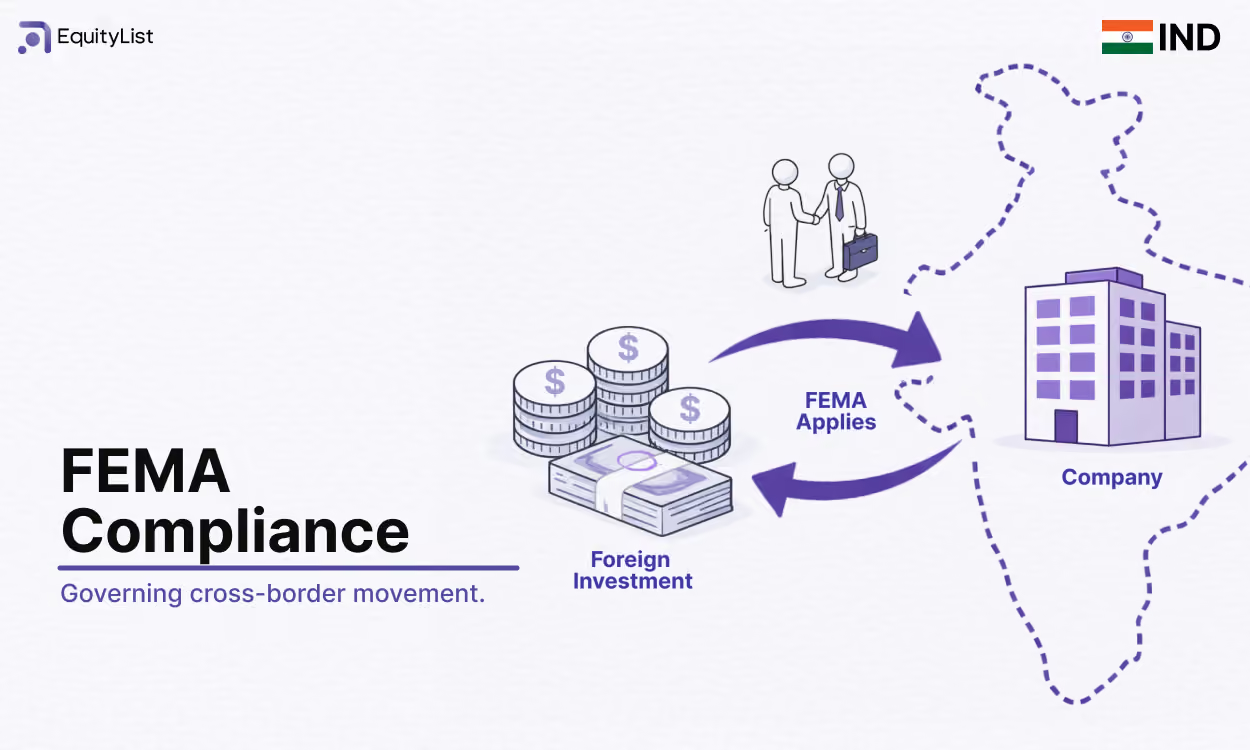
When a non-resident invests in an Indian company, the transaction does not end with receiving funds and issuing shares. The company must comply with the Foreign Exchange Management Act, 1999 (FEMA), which governs how foreign investment enters, moves within, and exits India. These obligations apply at the time of investment, during the life of the investment, and when ownership changes.
What is FEMA compliance?
FEMA compliance refers to fulfilling the reporting, documentation, and regulatory requirements under the Foreign Exchange Management Act, 1999 for transactions involving foreign exchange or non-resident stakeholders.
It includes reporting foreign investments, share transfers, overseas investments, and cross-border payments to the Reserve Bank of India (RBI) within prescribed timelines.
What is the purpose of FEMA?
FEMA was introduced to:
1. Regulate foreign exchange transactions
FEMA governs how money moves between India and other countries, including investments, remittances, borrowings, and payments. It defines what transactions are permitted, restricted, or require approval.
2. Facilitate foreign investment into India
FEMA creates a predictable regulatory framework that enables foreign investors to invest in Indian companies, while ensuring such investments follow pricing, reporting, and sectoral rules.
3. Ensure transparency in ownership involving non-residents
FEMA requires companies to report when foreign investors acquire, transfer, or hold ownership. This allows regulators to maintain accurate records of foreign ownership across Indian companies.
4. Ensure compliance with RBI reporting and regulatory requirements
FEMA establishes reporting mechanisms through which companies disclose foreign investments, overseas investments, and ownership changes to the Reserve Bank of India.
Who regulates FEMA compliance in India?
- The Reserve Bank of India is the primary authority responsible for maintaining official records of foreign ownership through filings submitted on the FIRMS portal, including FC-GPR, FC-TRS, and FLA returns.
- Companies submit filings on the RBI’s FIRMS portal, but these filings are routed through the company’s Authorised Dealer (AD) bank. The AD bank verifies investor details, confirms receipt of funds, and reviews supporting documents before submitting filings to the RBI.
- The Directorate of Enforcement enforces FEMA and can investigate companies that fail to comply. Enforcement action typically follows delayed reporting, incorrect reporting, or transactions that violate sectoral or pricing restrictions.
When FEMA compliance applies
FEMA compliance applies whenever a company creates, modifies, or holds foreign ownership, or engages in specific cross-border financial transactions.
The most common situations include:
1. Indian companies with foreign investment or subsidiaries
Companies that raise capital from foreign investors under the FDI route or operate foreign subsidiaries in India must:
- File Form FC-GPR, Entity Master Form, and Form FC-TRS (for share transfers)
- Maintain sectoral caps and comply with pricing, KYC, and AML norms
- Report capital investment, share allotments, and downstream investments
- File annual returns like FLA and Annual Performance Report (APR) for overseas investments
2. Startups receiving foreign investment
DPIIT-recognized or unregistered startups raising funds from foreign investors via equity, SAFE, or convertible notes must:
- Follow valuation norms or justify exemptions
- Ensure compliance with RBI reporting timelines and FEMA guidelines
- File necessary disclosures, including Form CN for convertible notes
- Comply with minimum investment and conversion rules for convertible notes
3. Exporters and importers
Companies engaged in cross-border trade must:
- Register for an Importer Exporter Code (IEC)
- Realize and report export proceeds within nine months of shipment (extendable via RBI)
- Settle import payments within six months (extendable via RBI)
- File shipping documents, SOFTEX forms, and invoices
- Route all transactions through RBI-authorized AD banks and maintain proper documentation
Non-compliance may result in penalties or restrictions on future transactions.
4. Companies issuing ESOPs to foreign employees
FEMA compliance applies when stock options granted to employees outside India are exercised and shares are issued, resulting in ownership in favor of a non-resident employee.
This ensures foreign ownership created through employee equity is properly reported.
5. Overseas Direct Investments (ODI) and External Commercial Borrowings (ECB)
Indian companies investing in foreign subsidiaries or joint ventures must:
- Submit Form FC within 30 days of investment
- File Annual Performance Reports (APR)
- Ensure valuation of overseas entities is certified by a qualified professional
For ECBs, companies raising debt from foreign lenders must:
- Comply with maturity, permissible end-use, and reporting requirements
- Route all ECB transactions through AD banks
- File Form ECB and Form ECB-2 for ongoing reporting
{{cta-form}}
FEMA compliance requirements and reporting forms
FEMA compliance is implemented through event-based and periodic reporting to the Reserve Bank of India (RBI).
These filings allow the RBI to maintain an accurate record of foreign investment in Indian companies and overseas investment made by Indian entities.
1. Form FC-GPR
Filed when:
A company issues shares to a non-resident investor.
Timeline:
Within 30 days of share allotment.
Purpose:
Form FC-GPR informs the RBI that foreign ownership has been created in the company. It records key details including the investor, investment amount, instrument issued, and resulting ownership percentage.
2. Form FC-TRS
Filed when:
Shares are transferred between a resident and a non-resident shareholder, in either direction.
Timeline:
Within 60 days of receiving or remitting consideration.
Purpose:
Form FC-TRS reports changes in foreign ownership resulting from secondary transfers. It ensures the RBI has an accurate record of who owns shares when ownership moves between resident and non-resident parties.
3. FLA Return
Filed when:
Annually, by companies that have received foreign investment or have made overseas investment.
Timeline:
By July 15 each year.
Purpose:
The Foreign Liabilities and Assets (FLA) return provides the RBI with a yearly snapshot of an Indian entity’s foreign financial relationships. It captures both foreign investment received by the company (liabilities) and overseas investment made by the company (assets).
4. ODI reporting
Filed when:
An Indian company invests in a foreign subsidiary, joint venture, or entity.
Timeline:
At the time of investment and annually thereafter.
Purpose:
ODI reporting allows the RBI to track outbound investments and foreign ownership held by Indian companies. It records investment amount, ownership percentage, and ongoing status of the overseas entity.
Penalties for FEMA non-compliance
FEMA violations can result in significant financial penalties.
Where the amount involved can be quantified, the penalty may be up to three times the amount involved. Where the amount cannot be quantified, penalties can extend up to ₹2 lakh, with additional penalties of ₹5,000 per day for continuing violations.
FAQs
1. What is the FEMA rule in India?
The FEMA rule in India refers to the regulations under the Foreign Exchange Management Act, 1999 that govern foreign exchange transactions and foreign ownership. These rules require companies and individuals to report foreign investments, overseas investments, share transfers involving non-residents, and cross-border payments to the Reserve Bank of India within prescribed timelines.
2. How to check FEMA compliance?
Companies can check FEMA compliance by verifying that all required filings related to foreign ownership and cross-border transactions have been properly submitted and acknowledged.
This typically involves:
- reviewing filings submitted on the RBI FIRMS portal, such as FC-GPR, FC-TRS, and FLA returns
- confirming submission and approval status with the company’s Authorized Dealer (AD) bank
- ensuring foreign investors and ownership changes are accurately reflected in the company’s cap table
FEMA compliance is ensured when the company’s ownership records, transaction documentation, and RBI filings are complete, accurate, and consistent.

.png)
.svg)
.svg)
.svg)